Early Life and Struggle for Independence
Born on May 12, 1929, in the village of Etunda in the Omusati Region of Namibia, Sam Nujoma was the eldest of eleven children. His early life was marked by traditional farming and herding cattle. Despite limited formal education, he attended a Finnish missionary school at Okahao and later worked as a cleaner for the South African Railways in Windhoek, where he attended night classes to improve his English.
In the 1950s, Nujoma became involved in the struggle against colonial rule and apartheid. He was a founding member of the South West Africa People’s Organization (SWAPO) in 1960, which later became the leading liberation movement in Namibia. Nujoma led SWAPO’s armed wing, the People’s Liberation Army of Namibia (PLAN), in a guerrilla war against South African rule.
Presidency and Nation-Building
Following Namibia’s independence in 1990, Nujoma was elected as the country’s first president. During his 15-year tenure, he focused on nation-building, promoting national reconciliation, and establishing democratic institutions. His leadership was pivotal in guiding Namibia through its transition to democracy and stability.
Nujoma’s presidency was also marked by his strong stance against Western influence and his support for Pan-Africanism. He maintained close ties with countries like Cuba, Russia, and China, while also engaging with Western nations. His advocacy for women’s advancement was notable, culminating in Namibia electing its first female president.
Legacy and Controversies
While Nujoma is celebrated as the “Founding Father of the Namibian Nation,” his legacy is complex. He was known for his anti-Western rhetoric and controversial statements on issues such as AIDS and homosexuality. His leadership style was sometimes characterized as autocratic, including a constitutional amendment for a third presidential term and the suppression of opposition movements.
Despite these controversies, Nujoma’s role in Namibia’s liberation and his contributions to its independence are undeniable. His passing has prompted an outpouring of tributes from leaders across Africa and the world, reflecting his significant impact on the continent’s history.
Conclusion
Sam Nujoma’s death at 95 marks the end of a significant chapter in Namibia’s history. His leadership in the fight for independence and his role in shaping the nation’s early years are integral to understanding Namibia’s journey. As the country mourns his passing, it reflects on his enduring legacy and the complex history of its liberation struggle.
]]>This conviction has sparked significant outcry both domestically and internationally. Amnesty International and other human rights organizations have condemned the ruling, characterizing it as a reflection of President Emmerson Mnangagwa’s administration’s alleged suppression of political dissent and curtailment of democratic freedoms. Critics argue that the misuse of public assembly laws is a common tactic used by Zimbabwe’s government to target opposition leaders and activists. Mnangagwa, who has faced ongoing criticism for authoritarian tendencies since assuming power in 2017, denies these claims but has repeatedly cautioned opposition groups against actions deemed disruptive to public peace.
The timing of this case has added to its significance, as Zimbabwe navigates economic and social challenges that have heightened political tensions. The CCC, as the main opposition, has accused the ruling ZANU-PF party of employing state mechanisms to intimidate political rivals ahead of key electoral periods. Timba’s lawyer, Webster Jiti, has indicated that sentencing is expected next week and hinted at possible appeals against the judgment
This case highlights broader concerns about the state of democracy and human rights in Zimbabwe. The international community is closely watching how the government balances its commitment to maintaining order with the fundamental rights of freedom of assembly and expression. Critics argue that rulings like these exacerbate Zimbabwe’s political instability and undermine efforts to restore global confidence in the country’s governance.
As Zimbabweans await the sentencing, the case underscores the fraught relationship between the ruling establishment and opposition forces, with many questioning the fairness of judicial processes in politically charged cases. For Timba and his supporters, this moment represents a critical test of resilience in the face of growing pressure.
]]>1. The Scramble for Africa
The Berlin Conference of 1884-1885 is often seen as the formal beginning of the Scramble for Africa. European powers convened to negotiate and partition African territories among themselves without regard for the continent’s existing ethnic, cultural, or political boundaries. This arbitrary division created countries with borders that often grouped together disparate communities or split cohesive ones, leading to ongoing ethnic and political conflicts.
2. Economic Exploitation
European colonial powers exploited Africa’s resources for their own benefit. They extracted minerals, agricultural products, and other resources, often using brutal methods of labor exploitation. The extraction of resources was primarily geared towards benefiting European economies, with little regard for the development or welfare of local African communities.
3. Political and Social Disruption
Colonial rulers imposed new political systems and structures that disrupted traditional governance and social systems. Indigenous political leaders were often sidelined or replaced with European-appointed administrators. This disruption undermined local governance structures and contributed to political instability that persisted after independence.
4. Cultural and Social Impact
European colonialism also had significant cultural impacts. Colonial powers often promoted their own languages, education systems, and cultural norms, marginalizing or undermining local cultures and languages. This cultural imposition created a legacy of identity issues and a loss of cultural heritage that many African nations still grapple with today.
5. Resistance and Independence Movements
Despite the harsh conditions, African resistance to colonial rule was persistent. Independence movements grew throughout the 20th century, leading to the decolonization wave after World War II. Although many African countries gained independence, the legacies of colonialism—including economic dependency, political fragmentation, and social divisions—continued to affect their development trajectories.
6. Post-Colonial Challenges
The post-colonial era has been marked by efforts to overcome the legacies of colonialism. Many African nations have worked to rebuild their economies, political systems, and social structures, but they have faced significant challenges. Issues such as corruption, conflict, and economic dependency are often rooted in the colonial past.
In summary, European colonialism had a profound and enduring impact on Africa, shaping its political boundaries, economic systems, and social structures in ways that have influenced the continent’s development long after the end of colonial rule. The legacy of these actions continues to affect Africa’s trajectory and the lives of its people today.
]]>- Military Operations: Historically, Nigeria has relied heavily on military operations to combat terrorism. This has included large-scale offensives, such as Operation Lafiya Dole, aimed at reclaiming territories held by Boko Haram. While these operations have achieved some success in pushing back insurgent groups, they have also been criticized for human rights abuses and civilian casualties.
- Multinational Collaboration: Recognizing the transnational nature of the threat, Nigeria has actively engaged in regional and international cooperation. The Multinational Joint Task Force (MNJTF), comprising troops from Nigeria, Chad, Niger, Cameroon, and Benin, was established to coordinate efforts against Boko Haram and ISWAP across borders. While cooperation among these nations is crucial, coordination challenges and mistrust among member states have sometimes hindered effectiveness.
- Community Engagement and Deradicalization: Addressing the root causes of extremism, such as poverty, marginalization, and lack of education, is increasingly recognized as vital to long-term counter-terrorism efforts. The Nigerian government has initiated community-based programs aimed at countering radicalization and reintegrating former insurgents into society. However, the success of these programs has been limited by resource constraints, corruption, and the persistence of underlying grievances.
- Legislative and Institutional Framework: Nigeria has enacted several counter-terrorism laws and established specialized agencies, such as the National Counter Terrorism Center (NCTC), to coordinate efforts and enhance intelligence-sharing. However, the effectiveness of these institutions has been hampered by bureaucratic inefficiencies, corruption, and political interference.
- Humanitarian Assistance and Reconstruction: The humanitarian crisis resulting from the insurgency has displaced millions of people and devastated infrastructure in affected areas. Efforts to provide humanitarian assistance and facilitate reconstruction are integral to the broader counter-terrorism strategy. However, limited resources, insecurity, and bureaucratic hurdles have impeded progress in this regard.
- Challenges and Criticisms: Despite these efforts, Nigeria’s counter-terrorism policy faces significant challenges. Persistent corruption within security forces undermines effectiveness and erodes public trust. Allegations of human rights abuses, including extrajudicial killings and arbitrary detention, tarnish the government’s reputation and fuel grievances. Moreover, the evolving nature of the threat, characterized by tactics such as suicide bombings and kidnappings, necessitates continuous adaptation and innovation in counter-terrorism strategies.
In conclusion, analyzing Nigeria’s counter-terrorism policy reveals a complex and dynamic landscape characterized by a mix of military, diplomatic, and socio-economic interventions. While progress has been made in degrading the capabilities of insurgent groups, significant challenges remain in addressing the root causes of extremism, enhancing governance and accountability, and fostering regional cooperation. A holistic and multi-dimensional approach, informed by a deep understanding of local dynamics, is essential to effectively combat terrorism and promote stability in Nigeria and the broader region.
]]>Israeli tanks advanced on Rafah on Tuesday, seizing the crossing that has been the primary route for humanitarian supplies into the besieged Palestinian region, following weeks of threats to initiate a ground invasion into the city despite opposition from other countries.
The White House denounced the suspension of aid, and a senior US official subsequently disclosed that Washington had put a stop to a bomb shipment last week because Israel had not responded to US concerns about its plans for Rafah.
The incursion into the southern city, teeming with internally displaced inhabitants, coincided with a meeting in Cairo between mediators and negotiators to attempt to broker a ceasefire and hostage release agreement in the seven-month conflict between Israel and the Islamist organisation Hamas.
Requesting to remain anonymous, a top Hamas leader issued a warning, saying that this would be Israel’s “last chance” to release the numerous hostages that the terrorists still had.
The state-affiliated A group from Hamas was meeting with mediators from Qatar, the United States, and Egypt, according to a report published by Al-Qahera News on Tuesday.
Israel was among “all parties” that subsequently agreed to pick up the negotiations. Benjamin Netanyahu, the prime minister of Israel, had earlier stated that a delegation from his nation was already in Cairo.
Israel’s close ally and chief military backer, the United States, said it was hopeful the two sides could “close the remaining gaps.”.
“Everybody’s coming to the table,” US National Security Council spokesman John Kirby told reporters. “That’s not insignificant.”
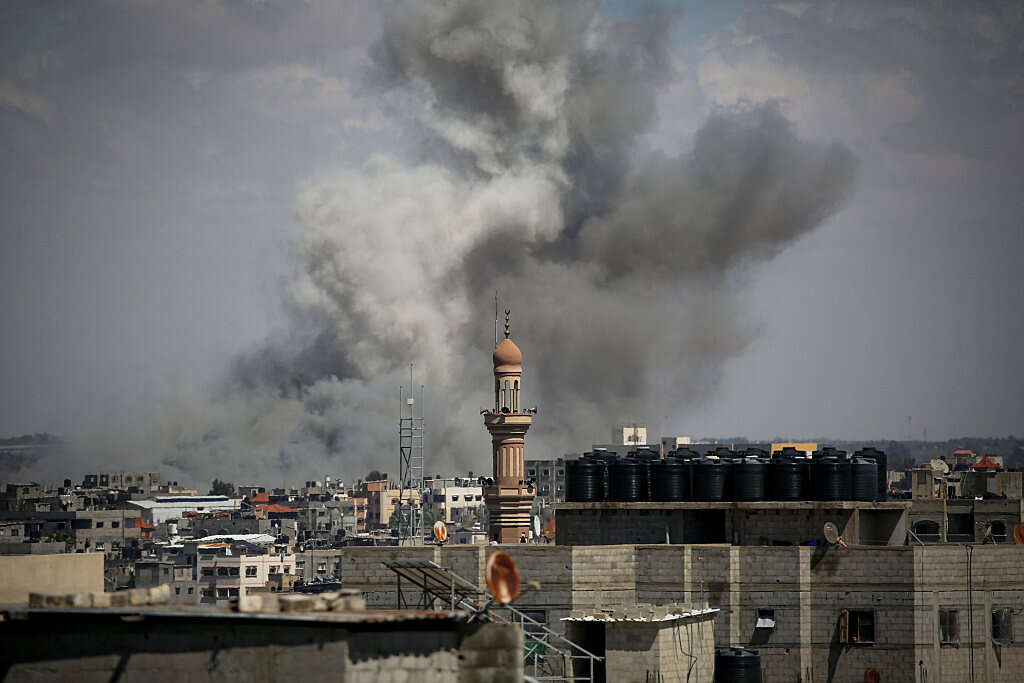
Ongoing strikes
Witnesses and a local hospital reported Israeli attacks throughout the Gaza Strip overnight into Wednesday morning, including in Rafah, despite the Cairo discussions.
Early on Wednesday, an attack on an apartment in the devastated Gaza City neighbourhood claimed the lives of seven members of the same family and injured numerous others, according to the Al-Ahli hospital.
Hours after Hamas declared late on Monday that it had approved a cease-fire proposal, which Israel claimed was “far” from what it had previously agreed upon, Israel launched its Rafah operation.
Nevertheless, the news sent jubilant Gazanians into the streets, though resident Abu Aoun al-Najjar of Rafah claimed the “indescribable joy” was fleeting.
More Israeli bombardments “stole our joy,” he told AFP, adding that “it turned out to be a bloody night.”

Aid blocked, bombs ‘paused’
In a film released by the Israeli army, tanks were shown on Tuesday assuming “operational control” over the Palestinian side of the Rafah crossing.
Being able to deny Hamas “a passage that was essential for establishing its reign of terror” was what Netanyahu called the operation “a very important step.”.
However, Israel has also refused his organisation’s access to Rafah and Kerem Shalom, another significant assistance crossing on the Israeli border, according to UN humanitarian office spokesperson Jens Laerke.
Antonio Guterres, the secretary-general of the UN, called the restrictions “especially damaging to an already dire humanitarian situation” and asked Israel to reopen both crossings “immediately.”.
A similar opinion was expressed by White House Press Secretary Karine Jean-Pierre, who described the closures as “unacceptable.”.
She stated that a reopening of the Kerem Shalom border was anticipated for Wednesday.
Soon after, a high-ranking Biden administration official disclosed, speaking under anonymity, that the US had “paused one shipment of weapons last week” as a result of Israel’s failure to answer Washington’s concerns regarding the Rafah incursion, to which Washington has strongly objected.
According to the official, the cargo included almost 3,500 heavy-duty bombs.
For the first time, Biden had followed through on a warning he issued to Netanyahu back in April: that US policy in Gaza would be contingent on Israel’s treatment of civilians.
According to the US official, Washington was “particularly focused” on the potential effects of using the largest bombs—2,000 pounds or 907 kilogrammes—in densely populated areas.
The source did, however, add, “We haven’t decided how to go with this in the end.
According to the US official, Washington was “particularly focused” on the potential effects of using the largest bombs—2,000 pounds or 907 kilogrammes—in densely populated areas.
The representative did, however, clarify that “we have not made a final determination on how to proceed with this shipment.”
Meanwhile, the Pentagon announced that the US military has finished building an aid dock off the shore of Gaza; however, due to the current weather, it is unsafe to move the two-part facility into its proper location.
In order to “gain a deeper understanding of the perspectives of Egyptian military leaders on regional security and the status of humanitarian aid,” General Michael Erik Kurilla, the head of the US Central Command, was reported to have visited Egypt on Monday and Tuesday.
In a film released by the Israeli army, tanks were shown on Tuesday assuming “operational control” over the Palestinian side of the Rafah crossing.
Being able to deny Hamas “a passage that was essential for establishing its reign of terror” was what Netanyahu called the operation “a very important step.”.
However, Israel has also refused his organisation’s access to Rafah and Kerem Shalom, another significant assistance crossing on the Israeli border, according to UN humanitarian office spokesperson Jens Laerke.
Antonio Guterres, the secretary-general of the UN, called the restrictions “especially damaging to an already dire humanitarian situation” and asked Israel to reopen both crossings “immediately.”.
A similar opinion was expressed by White House Press Secretary Karine Jean-Pierre, who described the closures as “unacceptable.”.
She stated that a reopening of the Kerem Shalom border was anticipated for Wednesday.
Soon after, a high-ranking Biden administration official disclosed, speaking under anonymity, that the US had “paused one shipment of weapons last week” as a result of Israel’s failure to answer Washington’s concerns regarding the Rafah incursion, to which Washington has strongly objected.
According to the official, the cargo included almost 3,500 heavy-duty bombs.
For the first time, Biden had followed through on a warning he issued to Netanyahu back in April: that US policy in Gaza would be contingent on Israel’s treatment of civilians.
According to the US official, Washington was “particularly focused” on the potential effects of using the largest bombs—2,000 pounds or 907 kilogrammes—in densely populated areas.
The source did, however, add, “We haven’t decided how to go with this in the end.
According to the US official, Washington was “particularly focused” on the potential effects of using the largest bombs—2,000 pounds or 907 kilogrammes—in densely populated areas.
The representative did, however, clarify that “we have not made a final determination on how to proceed with this shipment.”
Meanwhile, the Pentagon announced that the US military has finished building an aid dock off the shore of Gaza; however, due to the current weather, it is unsafe to move the two-part facility into its proper location.
In order to “gain a deeper understanding of the perspectives of Egyptian military leaders on regional security and the status of humanitarian aid,” General Michael Erik Kurilla, the head of the US Central Command, was reported to have visited Egypt on Monday and Tuesday.
‘Until the first hostage returns.
An AFP count of Israeli official numbers indicates that around 1,170 people, largely civilians, died as a result of Hamas’s unprecedented strike on Israel on October 7, which set off the Gaza conflict.
Israel’s retaliatory offensive, which it declared would destroy Hamas, has killed at least 34,789 people in Gaza to date, the majority of them women and children, according to the health ministry of the Hamas-run enclave on Tuesday.
On October 7, militants also kidnapped some 250 people; of them, Israel calculates that 128 are still in Gaza, including 36 who are thought to have died.
If discussions fail to bring the hostages home, Israel may “deepen” its operation in Gaza, according to Defence Minister Yoav Gallant.
“This operation will continue until we eliminate Hamas in the Rafah area and the entire Gaza Strip, or until the first hostage returns,” he added in a press release.
In the truce negotiations, Egypt and Qatar have assumed a major role. On Monday, Hamas announced that it had informed representatives of both nations of its “approval of their proposal regarding a ceasefire.”.
The plan called for a “permanent ceasefire” and included a full Israeli departure from Gaza, the return of Palestinians who had been displaced by the conflict, and a hostage-prisoner exchange, according to Hamas member Khalil al-Hayya, who spoke to the Qatar-based Al Jazeera news station.
The proposal, according to Netanyahu’s administration, is “far from Israel’s essential demands,” but the government will nonetheless send negotiators to Cairo.
Concern about the ramifications of an Israeli ground invasion on Rafah, where the UN estimates 1.4 million Palestinians are seeking sanctuary, has grown on a global scale.
However, Netanyahu has always stated that Israel must eliminate any residual Hamas fighters and that Israel will send in ground soldiers regardless of any peace.
The coastal “humanitarian area” of Al-Muwasi, where Israel’s military instructed refugees to go before the start of the Rafah operation, has been cautioned by aid organisations that it is not equipped to handle the surge.
]]>The decision by some African states to reconsider the presence of French military bases reflects a shifting geopolitical landscape and growing calls for greater sovereignty and autonomy in security matters. While France has portrayed its military presence in Africa as a means of promoting stability and security, critics argue that it perpetuates neo-colonial dynamics and undermines African agency in addressing regional challenges.
One such instance emerged recently when another African state, whose identity may vary depending on current events, signaled its intention to close a French military base within its territory. The decision was reportedly driven by a combination of factors, including concerns about sovereignty, domestic political considerations, and dissatisfaction with the terms of the military agreement with France.
For the African state in question, the presence of a foreign military base on its soil may be seen as a vestige of colonialism and a symbol of dependence on former colonial powers. Closing the base could be viewed as a step towards asserting greater control over its territory and security affairs, as well as asserting its independence in foreign policy.
Additionally, domestic political considerations may also play a role in the decision to close the base. Public sentiment regarding foreign military presence can vary, and political leaders may face pressure from constituents to take action on the issue. Closing the base could be perceived as a populist move to appease nationalist sentiments and rally public support.
Furthermore, dissatisfaction with the terms of the military agreement with France may contribute to the decision to close the base. African states hosting foreign military bases often negotiate agreements that govern the terms of the deployment, including issues such as jurisdiction, taxation, and environmental impact. If these agreements are perceived as unfair or overly favorable to the foreign power, it could fuel calls for renegotiation or termination of the arrangement.
The decision to close a French military base in another African state underscores the complex dynamics surrounding foreign military presence in Africa and the evolving relationships between African states and former colonial powers. It reflects a growing desire among African nations to assert their sovereignty and autonomy in security matters, as well as the challenges and complexities involved in managing relationships with external partners in pursuit of national interests.
]]>In Somalia, a country grappling with longstanding political instability and widespread humanitarian challenges, an incident emerged where Somali soldiers, purportedly trained by the United States, were detained on suspicion of stealing food aid intended for distribution to civilians in need. This occurrence underscores the complexities and difficulties faced in addressing not only Somalia’s security concerns but also its pressing humanitarian needs.
Somalia has been plagued by conflict, famine, and insecurity for decades, with various armed groups vying for control and power. The presence of foreign military forces, including those from the United States, has been part of efforts to stabilize the country and combat extremist groups like al-Shabaab. As part of these efforts, the United States has provided training and support to Somali security forces, aiming to bolster their capacity to maintain peace and security within the country.
However, allegations of corruption and misconduct within Somali security forces have persisted, highlighting the challenges of ensuring accountability and transparency in such environments. The detention of soldiers suspected of stealing food aid underscores these challenges, as it points to potential abuses of power and breaches of trust within the ranks of those entrusted with maintaining security and serving the interests of the Somali people.
Food aid is a lifeline for many Somalis, particularly in regions affected by conflict, drought, and displacement. The diversion of such aid for personal gain not only deprives vulnerable communities of essential resources but also undermines efforts to alleviate suffering and promote stability in the country. It erodes trust in humanitarian interventions and exacerbates the already dire humanitarian situation in Somalia.
Addressing the root causes of such incidents requires a multifaceted approach that goes beyond mere military training and security assistance. It necessitates efforts to strengthen governance, promote accountability, and address the underlying socioeconomic factors that contribute to instability and vulnerability in Somalia. It also underscores the importance of robust oversight mechanisms to prevent and address misconduct within security forces and ensure that aid reaches those who need it most.
The detention of soldiers suspected of stealing food aid serves as a sobering reminder of the complex and interconnected challenges facing Somalia and the imperative of addressing them comprehensively and collaboratively. It underscores the need for sustained international support and engagement to help Somalia overcome its myriad challenges and build a more peaceful, prosperous, and resilient future for its people.
]]>