


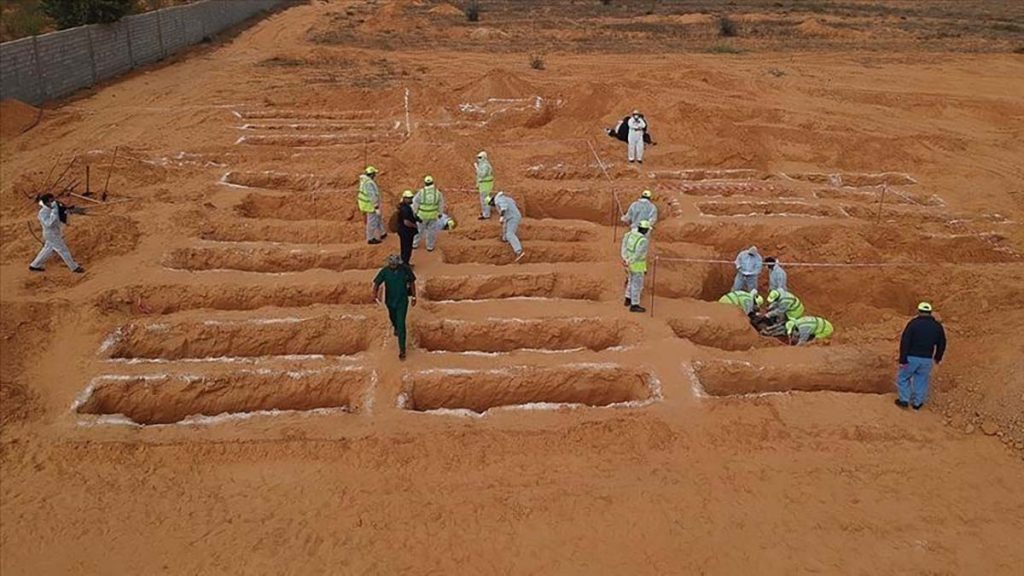
In recent years, Libya has become a focal point for the tragic realities of irregular migration, with numerous mass graves discovered across the country, underscoring the perilous journeys undertaken by migrants seeking refuge in Europe.
In March 2024, the International Organization for Migration (IOM) reported the discovery of a mass grave in southwest Libya’s Al Shuwairf region, approximately 421 km south of Tripoli. The grave contained at least 65 bodies, believed to be migrants who perished while being smuggled through the desert. The circumstances of their deaths and their nationalities remain unknown. DNA samples were collected before the bodies were reburied in a designated cemetery, following instructions from the attorney general of Gharyan town.
This discovery is part of a broader pattern of mass graves found across Libya. In February 2025, the IOM reported two additional mass graves: one in Jakharrah, around 400 km south of Benghazi, containing 19 bodies, and another in the Al Kufra desert in the southeast, believed to hold between 30 and 70 bodies. Some of these remains showed signs of gunshot wounds, indicating possible extrajudicial killings.
The African Commission on Human and Peoples’ Rights has expressed deep concern over these findings, emphasizing the need for swift and impartial investigations to identify the victims and perpetrators. The Commission also called for the establishment of regular migration channels to prevent such tragedies.
These mass graves highlight the severe exploitation and abuse faced by migrants in Libya. The country, mired in political instability since the 2011 overthrow of Muammar Gaddafi, has become a hotspot for human traffickers. Migrants, often from sub-Saharan Africa, are subjected to forced labor, sexual violence, and arbitrary detention. The IOM recorded over 3,000 migrant deaths and disappearances in 2023, with many occurring along Libya’s desert routes.
In response to these atrocities, the IOM has urged Libyan authorities to ensure the dignified recovery, identification, and transfer of remains, and to notify and assist the families of the deceased. The organization also calls for enhanced cooperation among governments to establish legal migration pathways and protect migrants from exploitation and abuse.
The discovery of these mass graves serves as a stark reminder of the urgent need for comprehensive reforms in Libya’s approach to migration and human rights. Without concerted international efforts to address the root causes of irregular migration and to protect vulnerable individuals, such tragedies are likely to continue.