


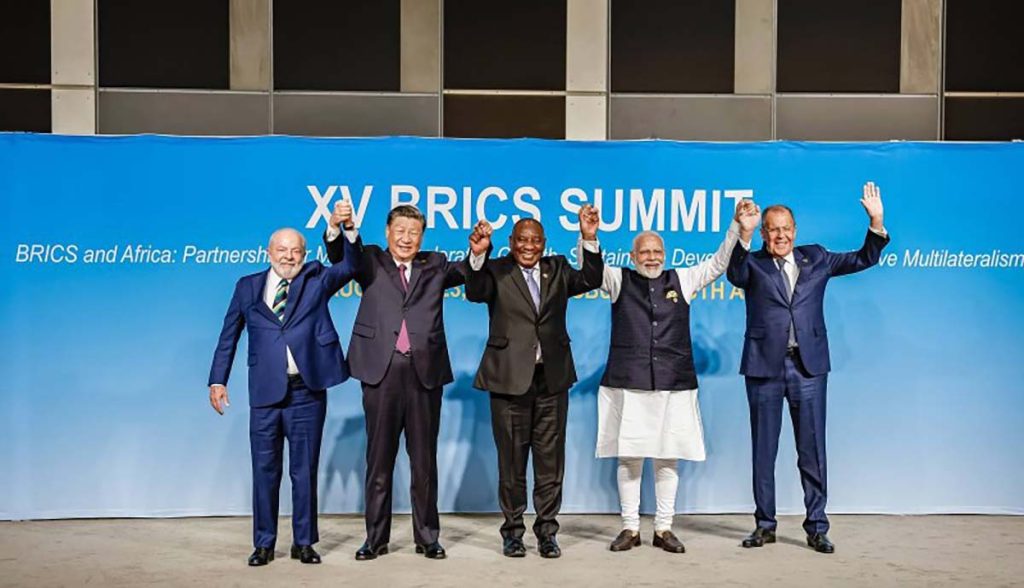
South Africa has made a compelling call for the BRICS bloc—comprising Brazil, Russia, India, China, and South Africa—to take a leading role in global conflict resolution. As the world experiences increasing geopolitical tensions, from regional wars to great power rivalries, Pretoria emphasizes the need for a multipolar world order in which emerging economies play a more active and balanced role in fostering peace and stability.
At recent BRICS gatherings and international forums, South African leaders have consistently voiced concerns about the failure of traditional Western-dominated institutions to resolve conflicts equitably. President Cyril Ramaphosa and other officials have highlighted how the United Nations Security Council, dominated by five permanent members, often reflects the interests of a few powerful states, leaving many developing nations underrepresented and their concerns unaddressed.
By contrast, BRICS represents a diverse coalition of nations from the Global South with significant influence in their regions and beyond. South Africa believes that BRICS can offer alternative, inclusive frameworks for mediation, diplomacy, and peacebuilding. These efforts could focus on conflict zones across Africa, the Middle East, Eastern Europe, and Asia, where deep-rooted grievances and external interventions have often stalled peaceful resolutions.
South Africa’s call is also rooted in its historical legacy. Having transitioned from apartheid to democracy through peaceful negotiations and reconciliation, South Africa sees itself as a moral leader in promoting dialogue over military intervention. The country has experience in mediating regional disputes and supporting post-conflict reconstruction, especially within the African Union (AU) framework.
Additionally, Pretoria argues that BRICS should support peace by addressing the root causes of conflict—such as poverty, inequality, and underdevelopment. South Africa has urged the bloc to expand cooperation in areas such as infrastructure development, food security, and climate change mitigation, which can help stabilize fragile states and reduce the drivers of conflict.
Critics note that internal differences among BRICS members—especially regarding foreign policy and military engagement—may limit the bloc’s effectiveness in acting as a unified mediator. However, South Africa maintains that BRICS can still function as a platform for dialogue, promoting multilateralism and giving a voice to nations that are often sidelined in global politics.
In calling on BRICS to lead in conflict resolution, South Africa is advocating for a more just and balanced international system, where peace is pursued not through domination, but through partnership, equity, and mutual respect.